
 by artencordoba
The San Ildefonso Door of the Mosque-Cathedral of Córdoba looks better than it has in generations. On 30 September 2026 the Cathedral Chapter unveiled the result of its full restoration, a painstaking project that has cleaned, consolidated and studied one of the caliphal gateways on the building’s western façade. Here is what was done, what the restorers found and how to see it on your next visit.
What the San Ildefonso Door is and where to find it
The San Ildefonso Door opens onto the western façade of the monument, the side facing Calle Torrijos, opposite the Bishop’s Palace. It belongs to the group of gateways built during the extension of al-Hakam II in the 10th century, the most refined period of Umayyad architecture in Córdoba.
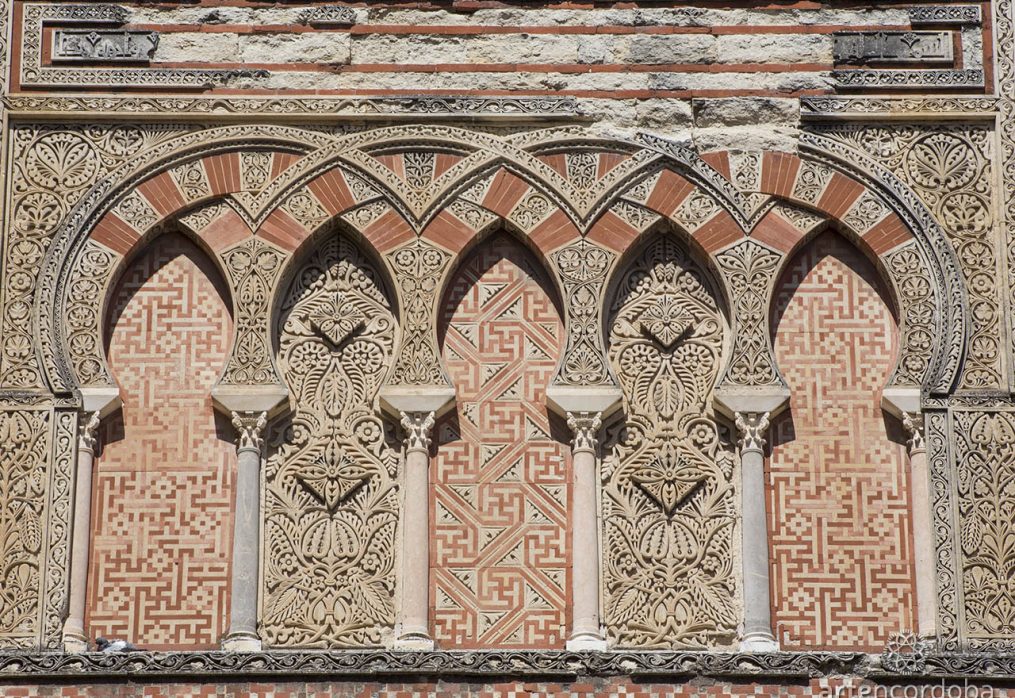
Like its neighbours on the same façade, it combines a central horseshoe-arched opening, voussoirs that alternate stone and brick, carved panels of plant and geometric ornament and, higher up, blind arcades of polylobed arches. This decorative language is repeated, with variations, across the other entrances on the west side of the building.
A gateway hidden for centuries
Part of the door’s recent history explains its deterioration. For a long stretch of the modern era a house stood attached to this section of the façade: the restorers documented remains of that building, which concealed the gateway roughly between 1741 and 1900. It shielded the door from the weather, but it also damaged the wall anchorages and left marks that needed to be resolved.
How the San Ildefonso Door was restored
Work began on 11 February 2025 and involved more than eleven months of actual intervention, with forced breaks due to spring rain and humidity. The budget was 206,000 euros, paid entirely by the Cathedral Chapter. Before this campaign the gateway had already needed emergency repairs in 2018 and 2022.
What problems it had
The diagnosis listed cracks, detachments and loss of material in both stone and brick, plus mortars and cements from earlier restorations that were not compatible with the original materials. There was also a deformed voussoir in the arch and damage caused by the building once attached to the façade.
Techniques used
The team, led by restorer Anabel Barrena, who has decades of experience working on the monument, selectively removed those incompatible mortars and combined several cleaning systems, including micro-blasting and laser, adapting the method to each material. The wooden door leaf and its ironwork were also cleaned, water-repellent treatments were applied to keep moisture out and a bird-deterrent system was installed, since birds are one of the most common sources of dirt on historic façades.
There was also an important decision of principle: in the upper areas, where the decoration had been almost completely lost, nothing was invented. Only the essential architectural lines were recovered so the whole can be understood, avoiding any historical forgery. It is the same approach followed in other ongoing works in the monument, as we explained in our article on how the restoration of the Mosque of Córdoba is progressing in 2026.
The findings: original colour beneath the stone
The most striking surprise has been the discovery of traces of original polychromy. In the tympanum of the central arch, restorers identified signs of a possible green glaze or enamel in the mosaic decoration, along with traces of reddish tones. These are valuable clues to how these gateways looked in caliphal times: far more colourful than the golden stone we see today.
Specialists also documented the building methods used in the eastern lintel, linked to the restorations carried out by sculptor Mateo Inurria on the monument’s façades in the early 20th century. That information is now on record for future work on the other doors.
This is no minor detail: the gateways of the western façade, together with the inscriptions that run along its walls, are among the best evidence of the artistic taste of al-Hakam II’s court.
How to see the San Ildefonso Door on your visit
The great advantage of this gem is that you can see it from the street. Just walk along Calle Torrijos, on the west side of the monument, to admire it with no ticket and no timetable, although afternoon light best brings out the relief of the carved decoration. Take the chance to compare its arches with those of the neighbouring doors and look at the alternating stone and brick of the voussoirs.
If you want to combine the façade with the interior, check opening times before you go. And if you are travelling in autumn, remember it is one of the best seasons to explore the outside of the monument calmly, as we explain in our guide to the best time to visit Córdoba.
Frequently asked questions about the San Ildefonso Door
Where is the San Ildefonso Door of the Mosque of Córdoba?
It is on the western façade of the Mosque-Cathedral, facing Calle Torrijos, opposite the Bishop’s Palace. It is one of the gateways of al-Hakam II’s 10th-century extension. You can admire it from the street at any time of day without a ticket, and the afternoon light especially enhances its carved decoration.
How much did the restoration cost and who paid for it?
The project had a budget of 206,000 euros, funded entirely by the Cathedral Chapter of Córdoba. Work began in February 2025 and the finished door was presented on 30 September 2026, after more than eleven months of actual work and several pauses caused by rain and humidity.
What was discovered during the restoration?
Restorers found traces of original polychromy in the tympanum of the central arch, with signs of a possible green glaze and reddish tones. They also documented remains of a house attached to the façade between 1741 and 1900 and building techniques from Mateo Inurria’s restorations in the early 20th century.
Can you enter the Mosque through the San Ildefonso Door?
It is not one of the usual visitor entrances. Tourist access is through the Courtyard of the Orange Trees, while the gateways of the western façade are mainly enjoyed from outside. That is why it is worth spending a few minutes walking around the building before or after your visit to the interior.
Behind every door of the Mosque lie centuries of history, changes of use and restorations like this one. If you would like to hear those stories on site, our guided tour of the Mosque-Cathedral covers both the exterior and the interior with official guides who will help you read every arch and every inscription.


